
Transcript
Announcer:
Welcome to CE on ReachMD. This activity, titled “Navigating Today and Shaping Tomorrow in Indolent Systemic Mastocytosis: Personalized Strategies With Current and Emerging KIT Inhibitors” is provided byTotalCME.
Prior to beginning the activity, please be sure to review the faculty and commercial support disclosure statements as well as the learning objectives.
Chapter 1
Dr. Tashi:
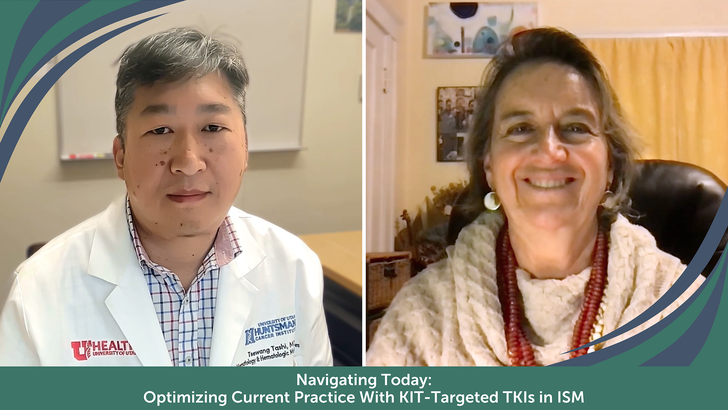
Welcome to this educational activity on KIT-targeted tyrosine kinase inhibitors in the treatment of indolent mastocytosis, or ISM. In this first chapter, we will discuss current practice for using KIT-targeted TKIs to treat patients with ISM. This is CE on ReachMD, and I'm Dr. Tsewang Tashi.
Dr. Castells:
I am Dr. Mariana Castells. I'm the Director of the Brigham and Women's Mastocytosis Center in Boston.
Dr. Tashi:
So let's start our discussion with a case. So a 52-year-old male is seen in the clinic with a long-standing history of brownish maculopapular fixed rash that's covering his lower back, lower abdomen, bilateral thighs, that has been gradually progressive for the last three to four years. He also has frequent diarrhea for the last couple of years. He also noted to have a progressive fatigue in the last couple of years with occasional headaches. Biopsy of one of the skin lesions showed mast cells consistent with urticaria pigmentosa. So a bone marrow biopsy was done showing several focal mast cell aggregates. Serum tryptase was elevated at 47 mg/L and a KIT D816V mutation was positive at 0.6%, and a DEXA scan was done that showed a T-score of -2.1 consistent with osteopenia. So he was started on antihistamine with cetirizine, famotidine, and later on due to his GI complaints, cromolyn was added. Since then, the frequency and the intensity of these skin flareups have decreased and his diarrhea has now decreased to about once a day. But he still continues to have abdominal bloating, and his skin lesions have gradually spread now to his thighs, upper arms, and upper back.
How would you approach this case, if the patient came to your clinic?
Dr. Castells:
Yeah this is a very typical patient with indolent systemic mastocytosis, which presents with a multi-organ involvement. His skin lesions are severe, they're progressing. They are flaring on a daily basis. He has gastrointestinal symptoms that are really not completely addressed by what medication he’s on. Right now, his fatigue, which is really curtailing his quality of life. And he has a DEXA scan indicating a fourth organ that is affected, which is bone losses.
Since 2023, the FDA has approved tyrosine kinase inhibitor avapritinib, which targets specifically the mutation that the patient has, the KIT D816V mutation, so that the patient would be a potential candidate with moderate to severe symptoms of mast cell activation and with a moderate-to-severe mast cell burden. Dr. Tashi, would you be able to review the clinical data that supported the approval of avapritinib in indolent systemic mastocytosis?
Dr. Tashi:
Sure. So avapritinib was approved by the FDA for indolent systemic mastocytosis based on the PIONEER study. So the PIONEER study was a phase 2 study, randomized placebo-controlled, in patients with ISM. And a total of 212 patients were enrolled worldwide. Avapritinib was dosed at 25 milligrams daily. And the study met its primary endpoint assessing total symptom score reduction. At 24 weeks, avapritinib led to a mean decrease of 15.6 points, compared to only 9.2 points degrees with placebo. And the safety profile was very encouraging with many toxicities that were similar to placebo. The only avapritinib-related toxicity was peripheral edema, which was mainly low grade. And now, we have a long-term follow-up of PIONEER study presented at ASH in December last year. At two years, avapritinib showed a deep and sustained response of the total symptom score reduction of 17.5 points and 19.3 points at 3 years. Even using up to 3 years now, there's no new safety concerns that were noted. The efficacy is also consistent with what we see in the real world too. I think there was one study from Germany last year at AAAAI in 17 patients with ISM who were on avapritinib had a significant improvement in their quality of life, and the basal tryptase level also significantly decreased.
So, Dr. Castells, what are the safety considerations regarding avapritinib?
Dr. Castells:
Essentially, as you mentioned, the safety profile indicates that swelling in the legs or around the feet and slightly dizziness or flushing were the major side effects of that.
Dr. Tashi:
So with these long-term data, it was interesting that about one third of the patients needed 50 milligrams. I think if we have a way to maybe predict in the future who the patients would be that might need 50. Right now I don't think we have a good, like a way to assess it.
Dr. Castells:
No, I think you are correct that in my experience, we start on 25 milligrams. And as we see improvement, but not to the extent that we would like, then we will have to increase to 50. The safety profile, as you suggested, has remained the same for the 50 milligrams. So I do not think that we will be increasing side effects on those patients, but definitely a proportion of patients will need the 50 milligram dosage.
Dr. Tashi:
Okay. Yeah, that's been great. So before we wrap up, Dr. Castells, can you provide us with one key takeaway from this chapter?
Dr. Castells:
Yes, for patients with indolent systemic mastocytosis who have significant burden, moderate to severe burden of mast-cell-activation, and in whom biomarkers, whether tryptase, mast cell aggregates, or a little fraction of the KIT D816V mutation is significant, I would recommend that avapritinib should be an option for those patients.
Dr. Tashi:
Thank you. Thank you very much. So in chapter 2, we'll be discussing next-generation KIT-targeted TKIs under clinical investigation. Stay tuned.
Chapter 2
Dr. Tashi:
Welcome back. In the first chapter, we discussed current practices of using KIT-targeted TKIs to treat patients with ISM. So now in chapter 2, we'll be discussing next-generation KIT-targeted TKIs under clinical investigation. So let's get started. Dr. Castells, what investigational next-generation KIT-targeted TKIs you're most excited about?
Dr. Castells:
Thank you, Dr. Tashi. I was very excited about avapritinib, which now is in the market. And we are now facing the next-generation KIT tyrosine kinase inhibitors, which are also targeting the KIT D816V mutation for patients with indolent and smoldering mast cell disorders, systemic mastocytosis. Mainly elenestinib and bezuclastinib are the ones that have attracted my attention. They're both targeting KIT D816V and they both have significant difference from avapritinib, which is they are not targeting the brain. So they don't have penetration to the brain.
They are high potency and they are selective, and they have been engineered to minimize the brain penetration and also enhanced safety and tolerability for long-term use. Dr. Tashi, could you review for us the HARBOR elenestinib trial for indolent systemic mastocytosis?
Dr. Tashi:
Yes. So HARBOR is a phase two study of elenestinib in indolent systemic mastocytosis and part 1, dose finding portion was completed back in 2023 and was presented at national meetings. In the part 1, 39 patients were dosed at different levels, ranging from 25 milligrams to 100 milligrams, and also included a placebo arm.
Across all dose levels, elenestinib was well tolerated. There was no grade 4 or 5 adverse events, and there were no treatment-related serious adverse events noted, and there were no discontinuations. Nearly all the side effects that were recorded were all grade 1 and 2. And at 12 weeks of treatment, elenestinib demonstrated consistent improvement in across all the major biomarkers of the mast cell burden that includes serum tryptase, bone marrow mast cells, and KIT D816V mutation variant allele frequency. Many patients experienced clinically meaningful reduction in the total symptom score, with improvements seen across the skin, GI, neurocognitive, and systemic symptom clusters. Right now, I think the part 2 of the study is currently going, and the dose that has been chosen, the optimal dose for going forward in the part 2 is 75 milligrams.
And then I think in addition to the primary endpoint of total symptom score reduction, there are additional secondary endpoints that were not seen in PIONEER before, is inclusion of bone health and anaphylaxis events. These are some of the interesting data that we'll be seeing in the future. Dr. Castells, what do you know about the clinical data on bezuclastinib that was recently presented?
Dr. Castells:
Bezuclastinib was ongoing, pretty much in parallel with the elenestinib HARBOR. And so the SUMMIT trial initially had a part one also, which was a dose selection and the 100 mg dose for daily use was recommended for the part two of the SUMMIT trial, which is also a multicenter, randomized, double-blind, placebo-controlled for patients with non-advanced systemic mastocytosis, but those include also in addition to indolent systemic mastocytosis, it also includes smoldering mastocytosis, which is a slightly more advanced type. The primary endpoints that were collected at 24 weeks showed that again, the primary endpoint was met with significant changes of the total symptom scores. And also the secondary endpoints, which were the 50% reduction in the serum tryptase and the KIT mutation and the bone marrow aggregates was also met.
So Dr. Tashi, what are your thoughts for future directions in indolent and smoldering systemic mastocytosis?
Dr. Tashi:
The next-generation selective KIT inhibitors, as you just discussed, bezuclastinib and elenestinib, are already moving forward and showing promising reduction in mast cell burden and symptom improvement in these trials. So over the next few years, as we see more and more data from these trials mature, it probably will, I think I foresee where it would let us tailor therapy based on efficacy, tolerability, comorbidities, and patient preference rather than just one size fits all approach. I think the patient-centered outcome and care delivery will be central. And we also see the expansion of multidisciplinary Mastocytosis Centers of Excellence and real-world registries to include more diverse populations, helping us close gaps in the diagnosis and access globally. So in short, I think the future of indolent mastocytosis is moving from managing the symptoms and hoping for the best to biologically-targeted, risk-adapted and genuinely patient-centered care.
Dr. Castells:
I agree with you, Dr. Tashi, and I want to emphasize a couple of points that are so relevant. First, you know, phenotyping the disease like you are saying, like the initial phenotyping, we still need to address that. The second is that we are able now to measure the allele fraction in the peripheral blood. And that actually is a major, major step forward.
So, patients are able to be offered like a diagnostic and prognostic values just looking at the peripheral blood. So I think those are critical things that are available and also steer our patients, like you were saying, in one direction or another. Patients with an allele fraction that's increasing would be patients in which the conversation that you said, the two-way street conversation. I do think that your symptoms may not be increasing, but your VAF is increasing. Let's think about, you know, maybe a TKI or next-generation TKI. So I think those are tools that are clinical tools that we have available that are tremendously powerful right now.
Dr. Tashi:
This has been great. Yeah. Dr. Castells, before we wrap up, can you provide us with all your thoughts, what would be one key takeaway from our discussion today?
Dr. Castells:
I think that, you know, the multidisciplinary approach to the disease is the key. But also, those patients suffer and they have been suffering a lot. Integration of the voice of the patient, but also the family of the patient. And to have the joint decision process in addition to all the things that we indicated today, the importance in the biomarkers in the new generation treatment options, but I think, putting the patient at the center of what we do, the family of the patient, and then all the tools that we have available would be my message.
Dr. Tashi:
That's great. Thank you very much, Dr. Castells. And that's all the time we have today. So I want to thank our audience for listening in, and thank you Dr. Mariana Castells for joining me and for sharing all your valuable insights. It was great speaking with you today.
Dr. Castells:
Thank very much. It was great to talk to you.
Announcer:
You have been listening to CE on ReachMD. This activity is provided by TotalCME.
To receive your free CE credit, or to download this activity, go to ReachMD.com/CME. Thank you for listening.
 In support of improving patient care, Global Learning Collaborative (GLC) is jointly accredited by the Accreditation Council for Continuing Medical Education (ACCME), the Accreditation Council for Pharmacy Education (ACPE), and the American Nurses Credentialing Center (ANCC) to provide continuing education for the healthcare team.
  Global Learning Collaborative (GLC) designates this activity for 0.25 contact hour(s)/0.025 pharmacy contact hour(s).
  Global Learning Collaborative (GLC) has been authorized by the American Academy of PAs (AAPA) to award AAPA Category 1 CME credit(s) for activities planned in accordance with AAPA CME Criteria. This activity is designated for 0.25 AAPA Category 1 CME credit(s). Approval is valid un

